As the share of renewable energy sources grows, so does the need for efficient energy storage. Large-scale storage systems help store surplus energy from photovoltaics, balance generation and consumption, and increase companies’ energy self-sufficiency. In these projects, however, it is not only about batteries, inverters, transformers or control systems. Site preparation, logistics and foundations also play a major role.
Faster Installation and Less Work Thanks to Ground Screws
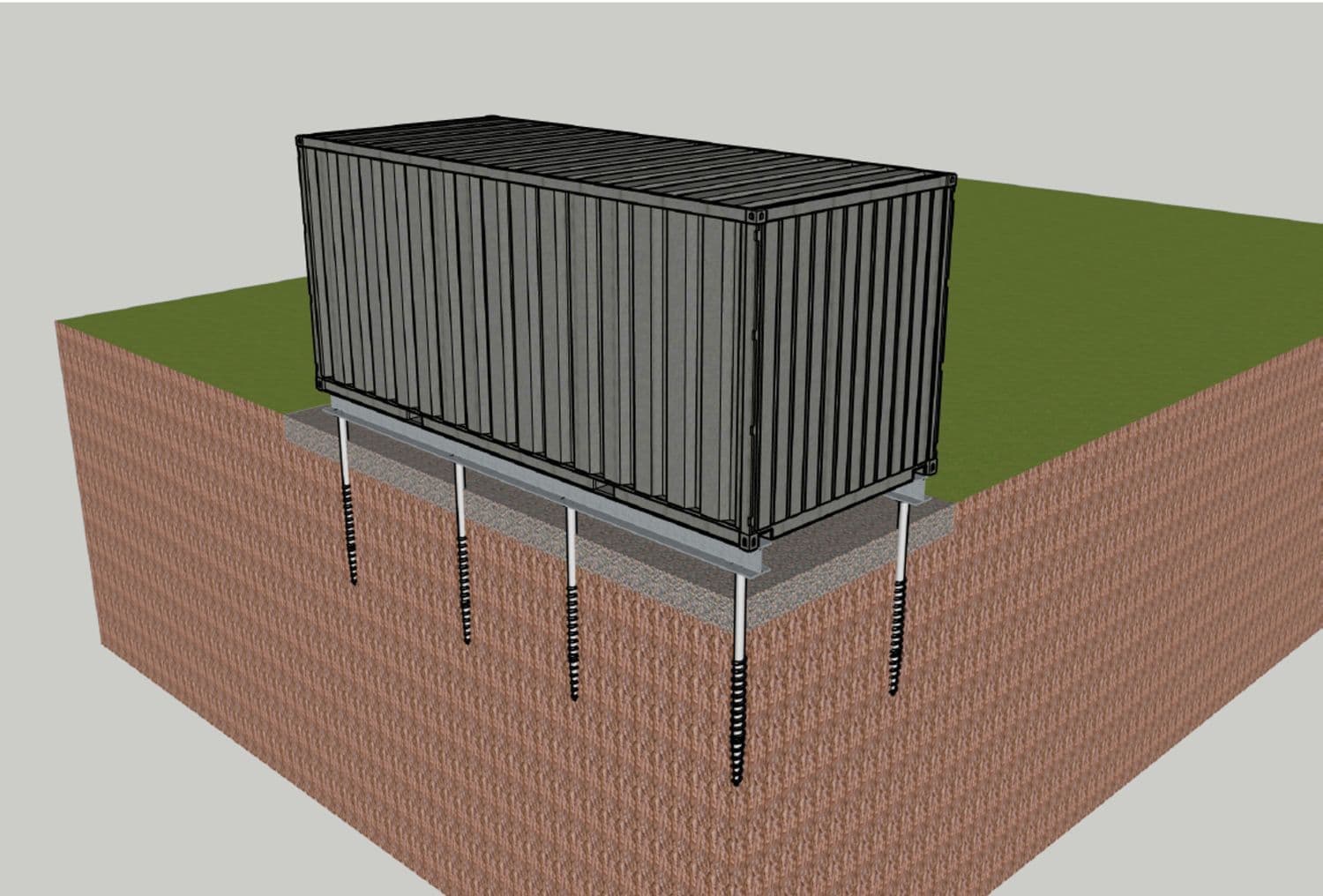
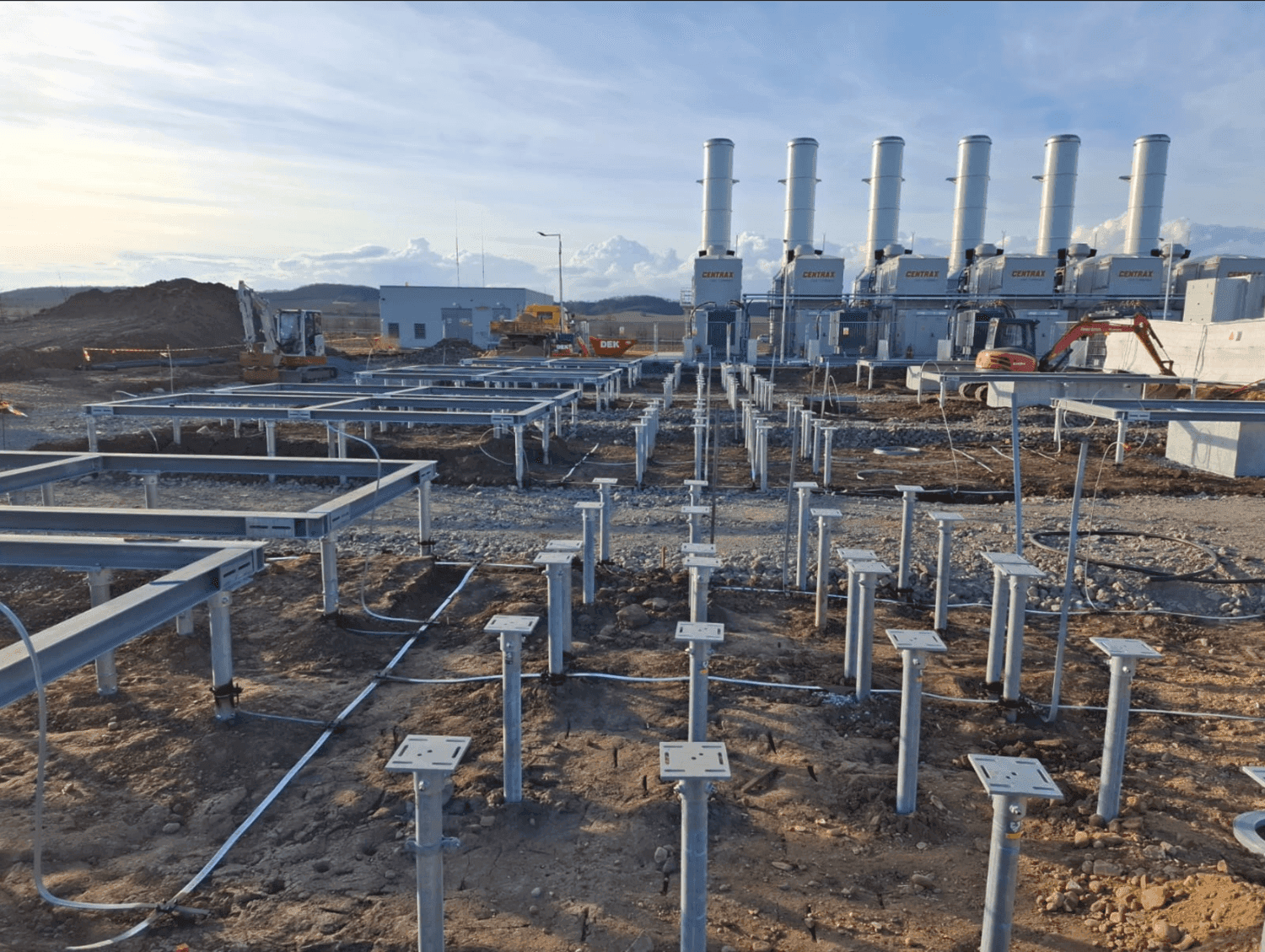
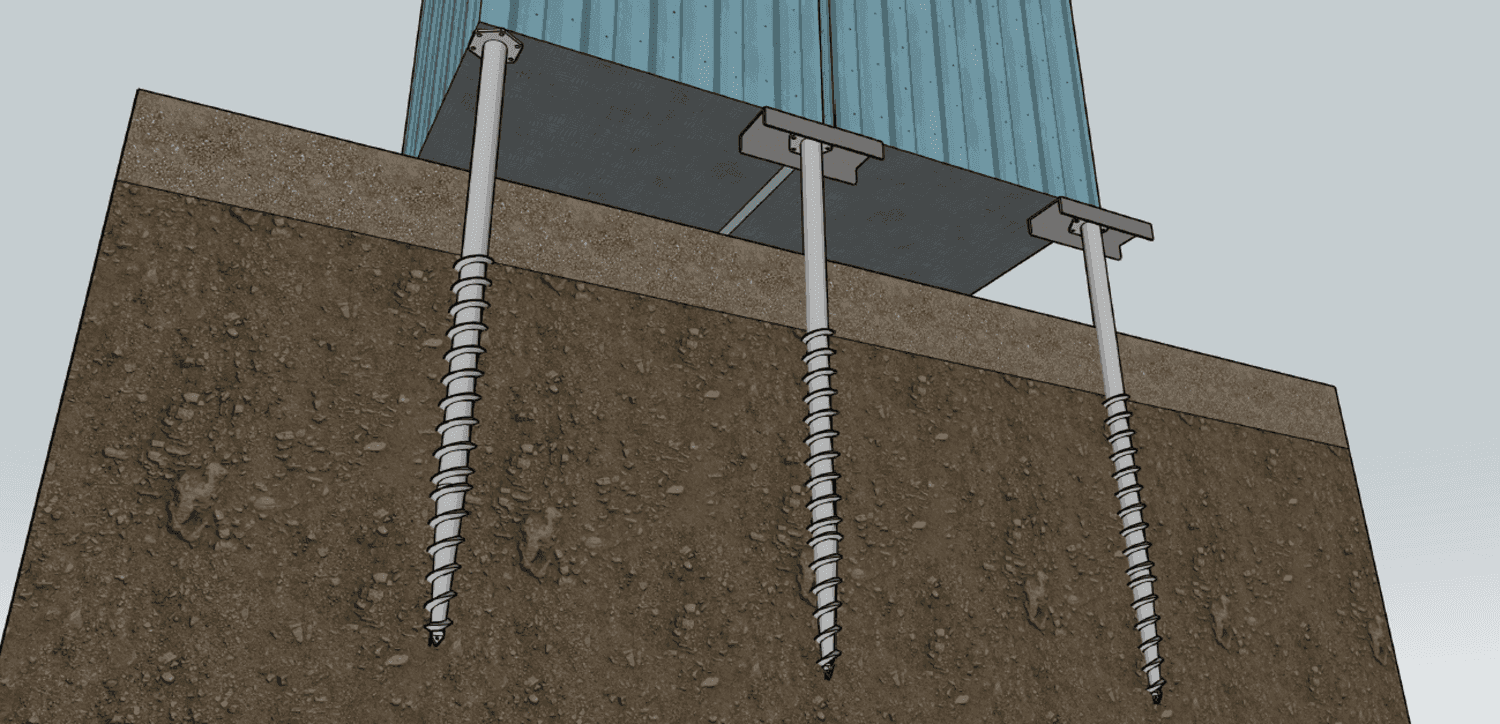
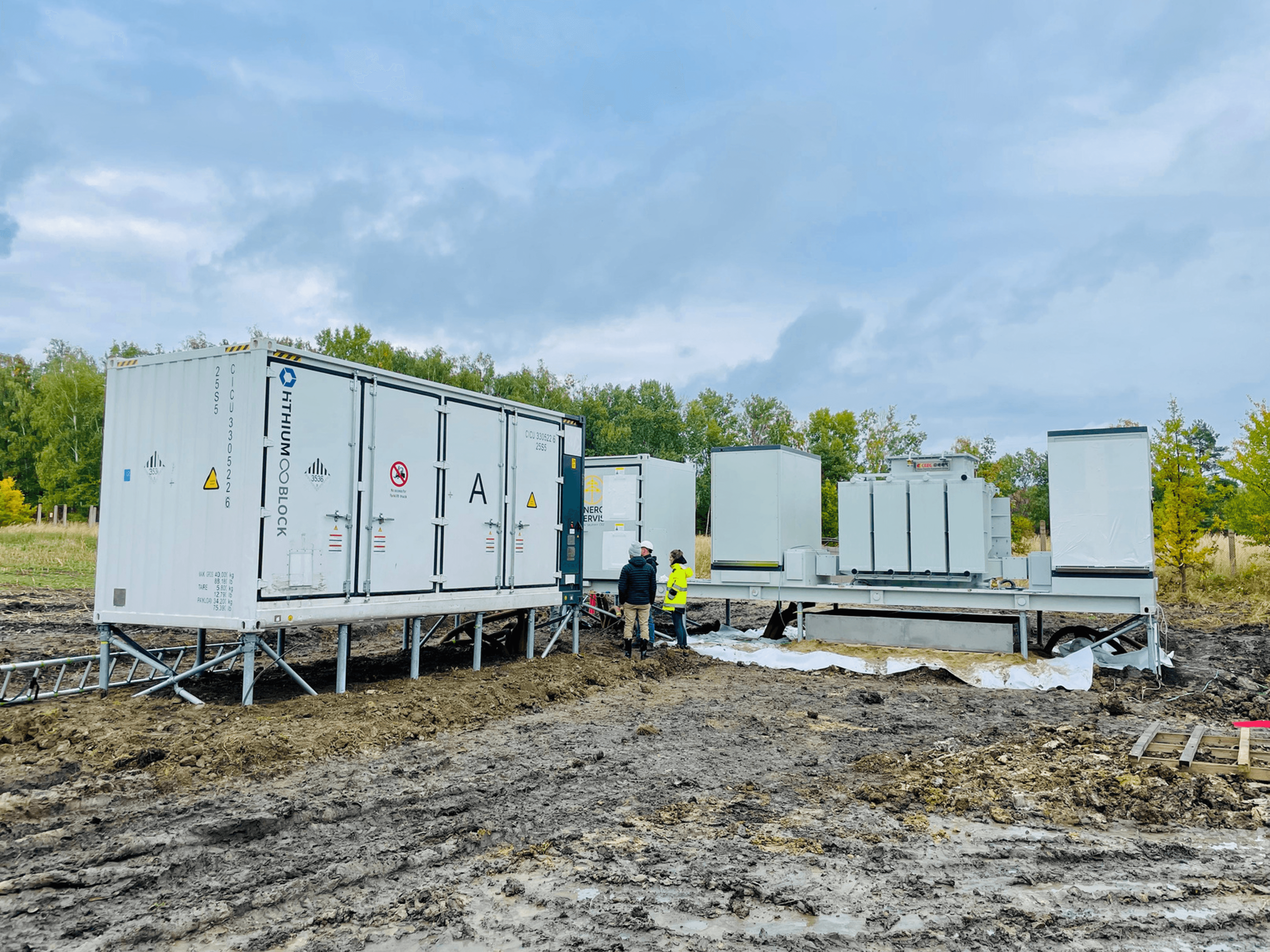
Founding a battery energy storage system on ground screws can shorten the implementation phase by tens of percent. Compared to concrete foundations, there is no need for excavation, formwork, concreting or waiting for the concrete to cure. Once installed, the screws are immediately ready to carry the structure, meaning that a BESS container, SKID platform, transformer station or similar equipment can be placed on them straight away.
Another advantage is the lower logistical burden on the construction site. There is no need to remove soil, deliver concrete or use heavy machinery. This is particularly important for projects in hard-to-access locations, on soft or waterlogged terrain, or wherever the impact on the surrounding environment needs to be minimized.
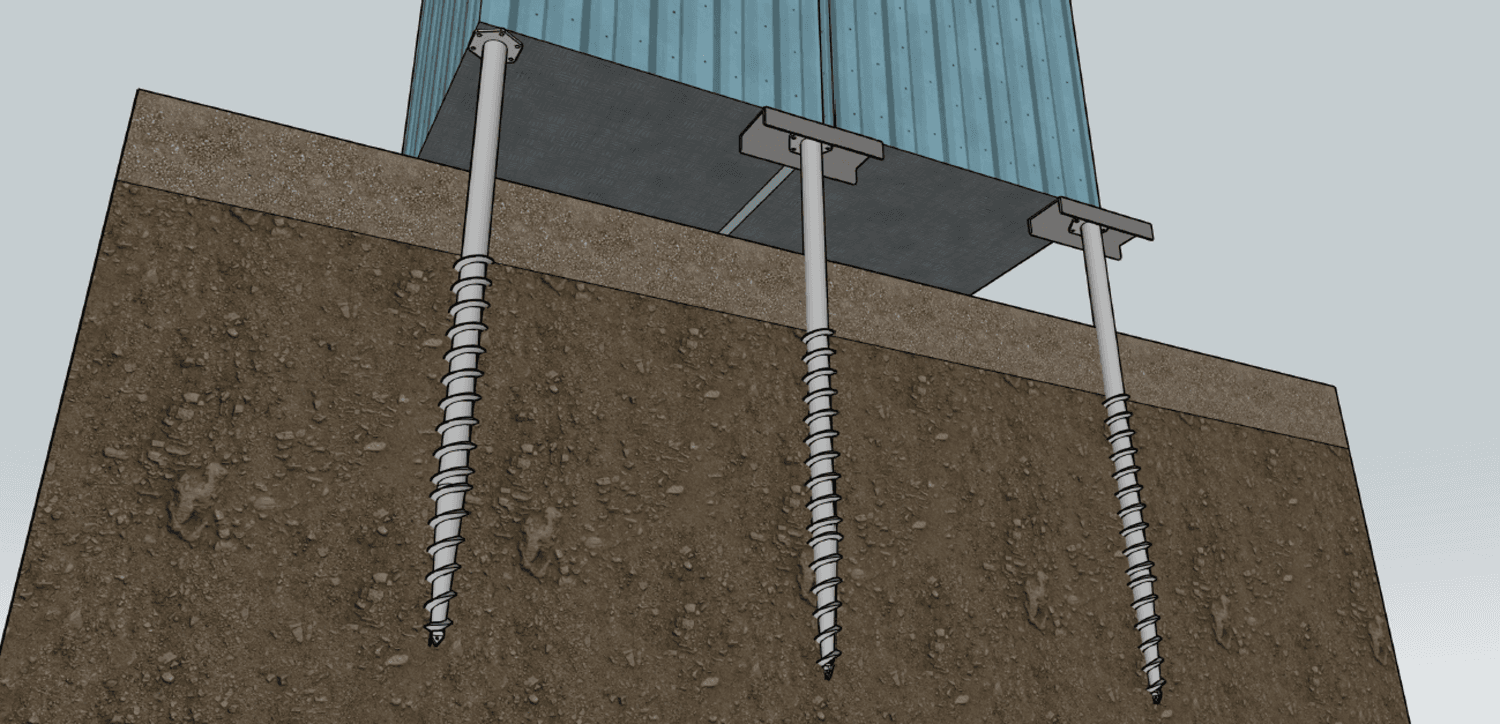
A Solution for BESS Containers, SKID Platforms and Transformer Stations
A battery energy storage system is often not just a single container. It may include multiple battery modules, inverters, transformers, cooling systems, cable routes and energy management systems. That is why the foundation must be designed according to the specific technology, its weight, dimensions and operational requirements.
Ground screws make it possible to create structural platforms for various types of energy installations. The design takes into account loads, airflow for cooling, cable routing and service access. The solution can therefore be suitable for battery containers, transformers, inverters and entire SKID platforms. An important part of the preparation is geotechnical investigation and pull-out tests, which help determine the correct type, number and depth of ground screws.
Lower Carbon Footprint and Future Flexibility
In addition to speed, ground screws also offer an environmental advantage. Compared to massive concrete foundations, they reduce material consumption, limit soil movement and leave a smaller footprint on the landscape. This is particularly relevant for renewable energy projects, where not only performance and return on investment are increasingly monitored, but also the environmental impact of construction.
Another advantage is reversibility. If the battery storage system needs to be relocated, expanded, reconfigured or if the site needs to be restored to its original condition in the future, ground screws can be removed with minimal impact on the surroundings. For developers, investors and BESS operators, this means greater flexibility in long-term planning.
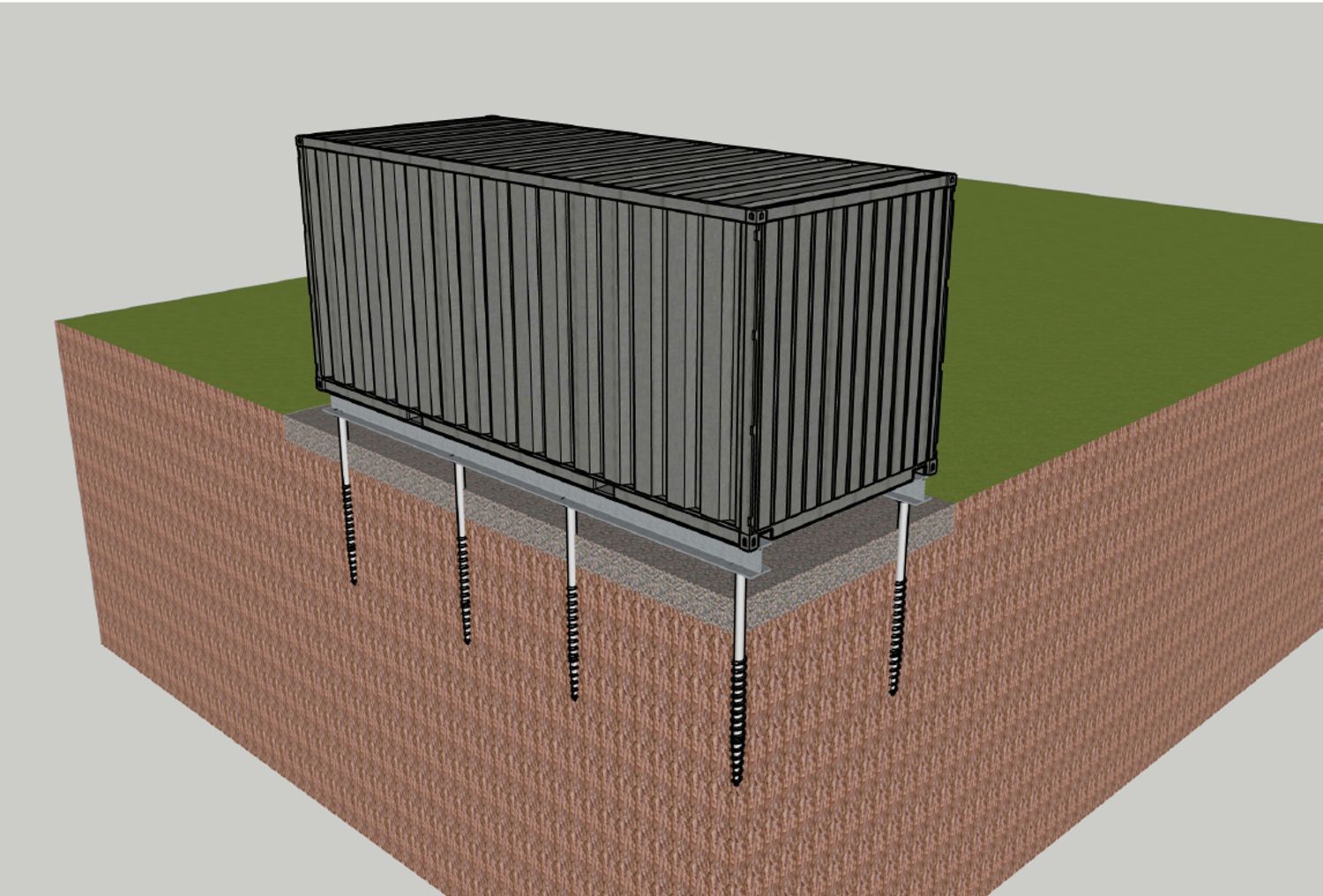
Technology in Practice Thanks to the Partnership Between Greenbuddies and BAYO.S
This type of solution is the domain of our technology partner, BAYO.S, which specializes in ground screw systems and their use in energy and construction projects. Thanks to our partnership, both the design and implementation of BESS on ground screws can be adapted to the specific conditions of the site and delivered as a technically and time-efficient solution.
How can damage to the screws be prevented and their service life maximized? The foundation design for BESS on ground screws is verified according to the specific conditions of the site. The soil type is assessed, and the proposed solution is either confirmed or adjusted based on a pull-out or compression test. A minimum 40% load-bearing safety factor is applied to the final design to ensure that the foundation is sufficiently robust, even in the event of uneven seating of the BESS container. Each installation is documented using the IoT Pilar system, making it possible to prove the quality of installation of individual screws. The result is a technically verified and overdimensioned solution designed to prevent displacement, bending or damage to the screws. For additional assurance, a soil corrosivity test is also available, which provides information on the minimum service life of the screw in the given soil based on chemical analysis.
A Solid Foundation for Modern Energy Storage
BESS on ground screws shows that modern energy infrastructure does not have to rely solely on traditional concrete foundations. Screw foundations speed up construction, reduce logistical requirements, lower the carbon footprint and enable faster installation of the technology.
For photovoltaic power plants, solar parks, industrial energy systems and energy storage projects, ground screws therefore represent a practical way to prepare a robust foundation with regard to time, budget and the environment.